Building Sites Prepared to Specification
Foundation Excavation in Ravenel for new construction and additions requiring accurate depth and level subgrade
Foundation contractors depend on excavation that matches engineered dimensions exactly, since concrete poured over improperly excavated areas creates structural problems that surface only after construction is complete and correcting them becomes expensive. First Step Construction LLC excavates building sites for residential homes, commercial structures, and building additions throughout Ravenel, using equipment that reaches required depth while maintaining the vertical walls or stepped slopes foundation designs specify. Accurate site measurements before excavation begins prevent the over-digging that wastes concrete and the under-digging that requires expensive return trips to remove additional soil after formwork is already in place.
This work involves verifying building location using surveyor stakes or engineer-provided site plans, removing topsoil and unsuitable material to expose load-bearing subgrade, excavating to foundation footing depth while maintaining dimensional accuracy, and creating level bearing surfaces that meet specifications for slab or footing placement. Excavation dimensions account for footing width, form placement, and any required working room around the foundation perimeter.
Request an estimate based on your foundation plans and site conditions to confirm excavation requirements before construction begins.
Why Accurate Excavation Supports Construction Schedules
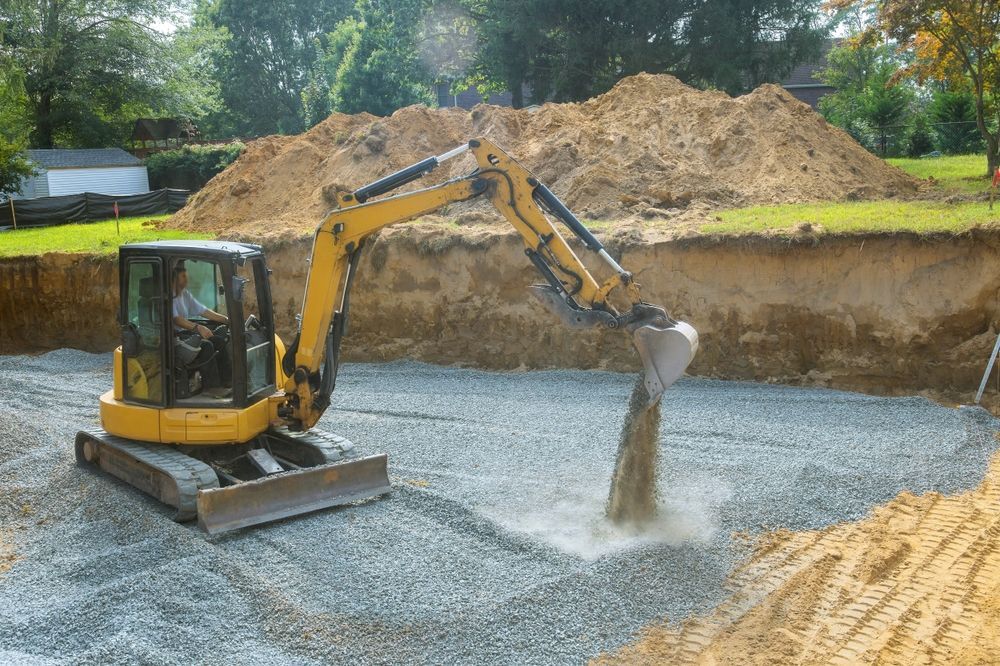
Excavation begins after building location is staked and site access is prepared for equipment operation. Operators remove soil in lifts, checking depth and level continuously to prevent over-excavation that would require imported fill or under-cutting that leaves foundation elements sitting higher than designed. In areas where groundwater sits close to the surface, dewatering may be necessary to keep the excavation dry during foundation work, and sloped excavation walls prevent collapse in loose sandy soils common around Ravenel.
When excavation is complete, foundation contractors can immediately begin forming and pouring without waiting for corrections, your construction schedule proceeds without excavation-related delays, and inspectors can verify that bearing surfaces and depths match approved plans before concrete placement starts. The excavation floor remains level and undisturbed, providing the stable bearing surface engineered foundation systems require.
Work includes excavation to specified dimensions, spoil management for later backfilling, and subgrade preparation, but does not include foundation construction, backfilling, or site grading beyond the building footprint. Coordination with your foundation contractor and building inspector ensures that excavation meets engineering requirements and local code standards before concrete work begins.
What Builders and Property Owners Usually Ask
Questions about foundation excavation typically focus on accuracy, timing, and site-specific challenges that affect the work.
What happens if soil conditions differ from what the engineer expected?
Excavation stops when unsuitable bearing material such as organic soil or loose fill is encountered, the engineer is notified to evaluate bearing capacity, and additional excavation or soil replacement may be required before foundation work can proceed safely.
How is excavation depth verified to match foundation plans?
Depth is checked using a laser level or builder's level referenced to established grade benchmarks, with measurements taken at multiple points across the excavation to confirm consistent depth that matches footing elevation shown on foundation drawings.
When should excavation happen relative to other site preparation?
Excavation typically occurs after clearing and rough grading establish site access but before foundation contractors mobilize, allowing enough time to address unexpected soil conditions without delaying the concrete pour schedule.
Why does equipment size matter for foundation excavation?
Compact excavators work well for residential additions in tight access areas, while larger machines are more efficient for new home sites where reach and digging depth allow faster excavation, and equipment selection affects both project cost and how much surrounding area is disturbed during the work.
What site access do excavation crews need?
Equipment requires clear access from the street to the building site, solid ground that supports machine weight without rutting, and enough room to maneuver around the excavation perimeter, with access routes planned to minimize disturbance to areas that will become finished lawn or landscape.
First Step Construction LLC coordinates excavation timing with builders and foundation contractors to support efficient project flow. Discuss your construction timeline and foundation specifications to schedule excavation that keeps your project on track.