Custom Excavation for Water Features
Pond Installation in Ravenel for residential, agricultural, and commercial properties requiring excavation tailored to drainage, size, and intended use
A properly excavated pond serves multiple purposes: livestock watering, irrigation storage, recreational fishing, or property aesthetics. First Step Construction LLC completes custom pond excavation across Ravenel and surrounding areas, shaping basins that hold water year-round while accounting for soil type, groundwater levels, and runoff patterns. Pond construction begins with site evaluation to determine excavation depth, slope angles, and spillway placement that prevents erosion during heavy rainfall.
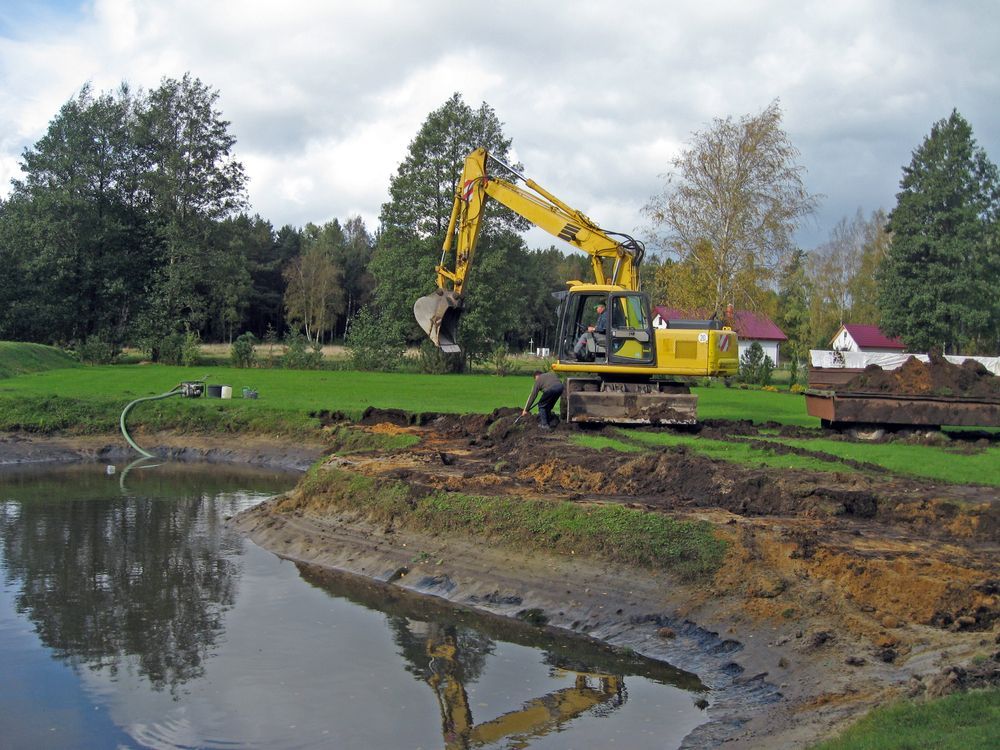
Pond excavation involves removing soil to create a basin with sloped sides that resist erosion, compacting the bottom to reduce seepage, and shaping an overflow spillway that directs excess water away from the pond without cutting channels through the embankment. Equipment selection depends on pond size and site access, with operators adjusting depth and slope as excavation progresses to match the property's topography and water retention needs.
Discuss your pond construction project to review excavation options and site conditions specific to your property.
Why Excavation Design Affects Water Retention
Pond depth determines whether water remains during dry months, with deeper basins retaining water below the seasonal low point of the water table. Side slopes are graded at angles that prevent collapse, typically ranging from three-to-one or four-to-one ratios depending on soil stability. Clay soils hold water effectively but require careful compaction, while sandy soils may need clay liner material added to the basin floor to reduce seepage.
Once excavation is complete, your pond will fill from rainfall, groundwater seepage, or directed runoff from surrounding land. Water levels stabilize as seepage and evaporation balance inflow, and the spillway prevents overflow from eroding the embankment during storms. Properly shaped ponds develop clear water over time as suspended sediment settles, and vegetation around the perimeter stabilizes banks without encroaching into the water.
Pond construction for agricultural use often includes shallower sections for livestock access, while recreational ponds may include deeper zones for fish habitat. Irrigation ponds require pump access points where equipment can draw water without disturbing sediment, and property enhancement ponds benefit from aesthetic shaping that blends with landscape features.
Common Questions About This Service
Property owners planning pond construction ask about excavation methods, water retention, and long-term maintenance to ensure the pond functions as intended.
What determines pond size and depth during excavation?
Intended use drives pond dimensions, with livestock watering requiring shallower access zones and recreational fishing needing deeper sections for temperature variation. Site topography and available runoff area determine whether the pond will fill reliably, and soil type affects how much excavation is needed to reach clay layers that reduce seepage.
How is the spillway designed to prevent erosion?
Spillways are shaped as broad, shallow channels with gradual slopes that slow water velocity during overflow events. Rock or vegetation lining the spillway prevents erosion, and the outlet is positioned away from the pond embankment to avoid undercutting during heavy rainfall.
When should pond excavation occur relative to other site work?
Excavation is best completed before final landscaping or driveway installation, as equipment access requires clear paths and material hauling creates temporary ground disturbance. Allowing the pond to settle for several months before stocking fish or planting aquatic vegetation gives the basin time to stabilize and water levels to equalize.
What site conditions in Ravenel affect pond construction?
High water tables in the Lowcountry mean that many ponds fill partially from groundwater, reducing dependence on surface runoff. Sandy soils common in the region may require clay liner addition to minimize seepage, and tidal influence on water tables affects pond elevation planning for properties near coastal areas.
How does excavation equipment handle different soil types?
Operators adjust digging methods based on soil composition, with sandy soils excavating quickly but requiring frequent slope checks to prevent collapse. Clay layers slow excavation but provide natural water retention, and mixed soils may require selective removal to place clay material at the pond bottom while using sandy material for embankment fill.
First Step Construction LLC provides pond excavation services for residential, agricultural, and commercial properties, shaping basins that retain water and support the property's intended use. Arrange a site consultation to review excavation planning and construction timelines for your pond project.