Building Sites That Drain Correctly
Grading and Leveling in Ravenel for properties requiring stable slopes, improved drainage, and construction-ready surfaces
Grading shapes raw land into building sites with controlled slopes that direct water away from structures while creating level areas where foundations, driveways, and parking areas will be constructed. Accurate equipment operation removes high spots and fills low areas to establish elevations specified in construction drawings, preventing drainage problems that emerge when water pools against foundations or erosion that undermines driveways years after initial construction. First Step Construction LLC provides grading services in Ravenel for homes, driveways, and commercial developments where long-term property performance depends on subsurface drainage patterns established during initial earthwork rather than attempted fixes after buildings are occupied and landscaping is installed.
The service involves setting grade stakes at specific elevations across the site, then moving soil systematically to match those elevations while maintaining compaction that prevents future settling. Operators check slopes repeatedly during grading to verify water will flow toward drainage structures rather than ponding in areas planned for building pads or vehicle circulation.
Request a grading estimate based on your site's existing topography and final elevation requirements.
What You Notice Once Grading Is Finished
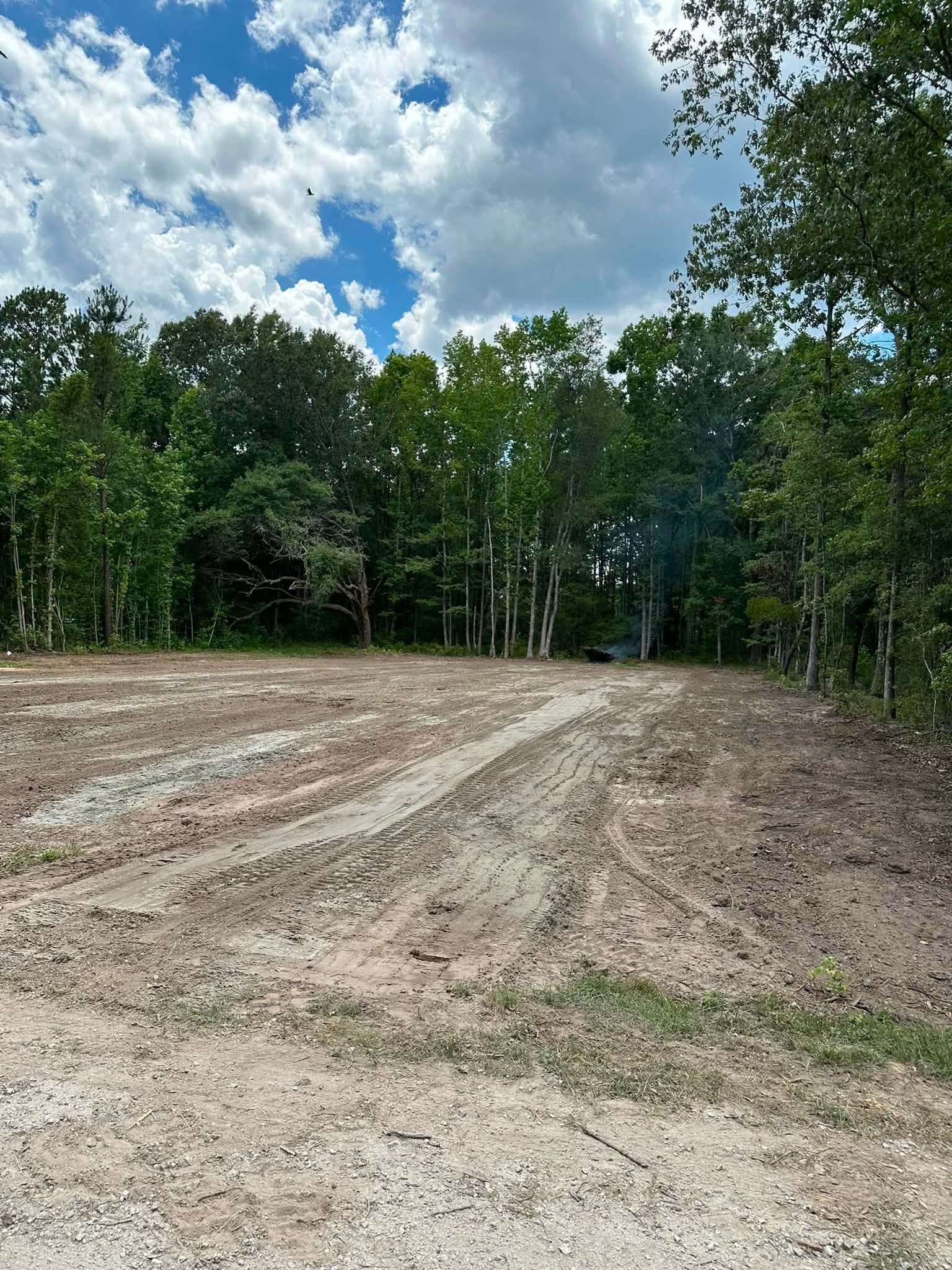
Grading equipment cuts soil from high areas and transports it to low spots where it's spread in lifts thin enough to compact properly rather than dumped in deep piles that remain loose underneath. Each lift is compacted before the next layer is placed, creating stable bearing surfaces that won't settle and cause cracks in foundations or pavement placed later. Improved drainage results from sloping surfaces at consistent grades rather than leaving undulating ground that creates pockets where water accumulates and saturates soil.
After grading completes, you'll notice building pads are level within tolerances required for foundation construction, typically less than an inch of elevation change across areas where slabs will be poured, and surrounding areas slope away from structures at grades steep enough to move water but gentle enough to prevent erosion. Swales and drainage pathways direct runoff toward retention areas or existing drainage ways rather than allowing it to sheet flow across neighboring properties or public rights of way.
Additional considerations include preserving topsoil by stripping and stockpiling it before grading begins so nutrient-rich material is available for landscaping rather than buried under subsoil, and establishing finish grades that account for planned pavement thickness so parking areas end up level with adjacent curbs after asphalt is placed. Sites with imported fill require testing to verify compaction meets engineering specifications before foundations are approved for construction.
What Property Owners Usually Ask
Grading projects in the Lowcountry must account for water tables that limit how deep cuts can go without dewatering, plus sandy soils that require different compaction approaches than clay soils common in other regions.
What determines the slope requirements for graded surfaces?
Building codes typically require minimum slopes of two percent away from structures to move water effectively, while maximum slopes are limited by erosion potential and whether areas will be mowed or left natural, so grading plans balance drainage needs against long-term maintenance requirements.
How does grading equipment create level building pads in Ravenel?
Operators use laser-guided systems or GPS technology that shows cab displays indicating whether the blade is cutting, filling, or on grade at each location, allowing them to match finish elevations within fractions of an inch across building footprints.
When should finish grading happen relative to other site work?
Rough grading establishes general contours before utility trenches are excavated, then finish grading brings surfaces to final elevations after utilities are backfilled and compacted so trenches don't settle and create low spots that trap water near buildings.
What's included in a grading project?
Work typically includes stripping topsoil from work areas, cutting and filling to achieve specified elevations, compacting fill material in controlled lifts, and replacing topsoil over areas planned for landscaping, though projects may also include installing drainage structures like catch basins or French drains where surface grading alone won't handle runoff.
How do you prevent erosion on newly graded slopes?
Sites receive temporary erosion control like silt fencing or straw mulch immediately after grading to prevent soil loss during storms before permanent vegetation establishes, and steep slopes may require permanent measures like retaining walls or riprap depending on their height and the soil type exposed after cutting.
First Step Construction LLC coordinates grading with your construction schedule so sites are ready for foundation work without delays caused by weather or inspection requirements. Contact us to evaluate your property's grading needs and receive a timeline estimate that accounts for soil conditions and drainage complexity specific to your development plan.